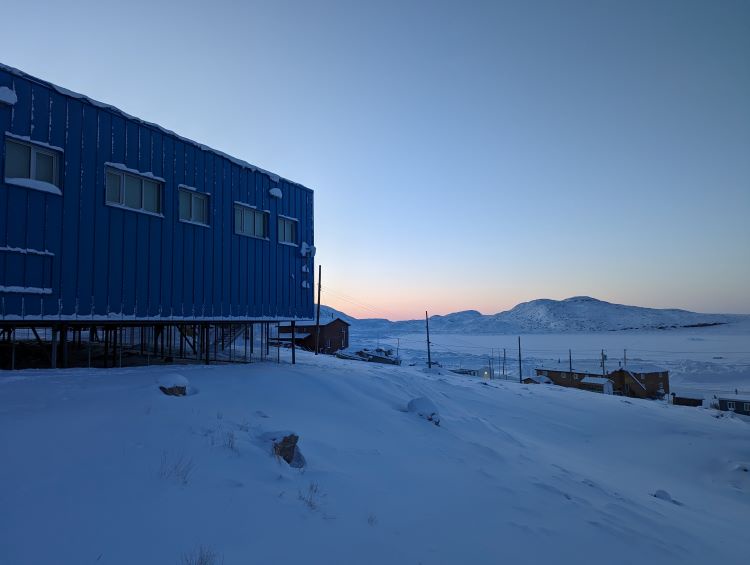
Excited to share that we have received British Academy funding for our collaborative project on coastal sea ice, where I’ll be working with glaciologist Sarah Cooley (University of Oregon) and the West Baffin Co-operative in Kinngait, Nunavut.
Partnering with Canada’s oldest Indigenous owned and Inuit led arts organisation, the West Baffin Cooperative, over the next two years (2024-26) we will study the loss of sea ice surrounding its art studio in Kinngait, located on Baffin Island in Canada’s far north.
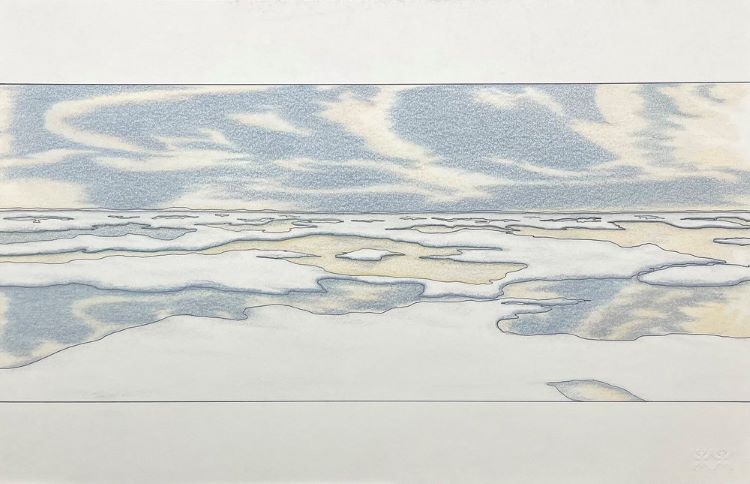
Using printmaking and drawing, alongside satellite imagery, From the Floe Edge examines the stories, science, and visual histories of coastal sea ice which forms along the remote community’s coastline during winter and spring.
While research has been carried out into sea ice around Kinngait before, it has largely focused on monitoring sea ice conditions for shipping and transportation. In collaboration with local Inuit artists, hunters and residents, which rely on sea ice, we intend to use an interdisciplinary, visual approach to understanding evolving local sea ice conditions. We are specifically interested in understanding the important local indicators of sea ice change, and how these indicators have changed over the past three decades.
The project was made possible thanks to a £259,000 ($447,000 CAD) grant from the British Academy Knowledge Frontiers International Interdisciplinary Research programme.
Recent news:
- “Research Project: From the Floe Edge,” 27 May 2024, Dorset Fine Arts.
- “From the Floe Edge”: British Academy funding success for Dr. Isabelle Gapp,” 23 May 2024, Department of Art History News, University of Aberdeen.
- “Aberdeen researcher to study sea ice loss at Canada art studio,” 20 May 2024, University of Aberdeen News.
 Isabelle Gapp
Leave a comment